Mama’s Saris

By Pooja Makhijani, Illustrated by Eleomez (Little, Brown and Company~ in 2007)

Every girl world widely experiences to get some impression of her mother’s dressing up in traditional way. A seven-years-old Indian descent girl finds her mother’s suitcase full of gorgeous silk, cotton and embroidered saris. Her mother wears a sari only for special events, while her grandmother dresses in one everyday. The girl is fascinated with beautiful traditional outfits, and her mother decides to dress up her daughter with a sari for celebrating her seventh birthday. >>> On the last page, a glossary of the Hindi words is provided.
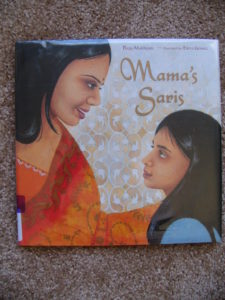
9-3-10 Las Vegas 008

娘が母親のおしゃれな衣装に憧れるのは、万国共通のようだ。インド人の少女が、母親のサリーを着ることをねだる母と娘の対話に、ほのぼのとした愛情が語られている。 サリーの見事な色合いを楽しませてくれるイラストも、素晴らしい。絵本の始めには、言葉の解説もあり、民族文化伝承のみならず異文化理解にも楽しみながら導いてくれる。英文も内容も解りやすいので、小学校低学年から親しめる。
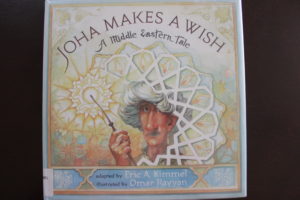
Joha Makes a Wish, a Middle Eastern Tale       

By Eric A. Kimmel, Illustrated by Omar Rayyan (Marshall Cavendish ~ in 2010)

Inspired by a folktale in the Middle East.  On the way to walk to Baghdad, Joha finds a whishing stick from the broken walls. No instruction how to use it, but Joha just wishes a new pair of slippers strong enough to continue his journey. But his old sandals disappear. When he wishes a donkey to carry him, he has to carry a donkey on his back. And the Sultan comes…..! How will Joha learn its secrets before he wishes himself into more trouble?

IMG_0167

アラビア語圏で語り継がれているJohaの話が基となっている。バグダッドに歩いて向っていたJohaは、たまたま休んだレンガの古壁に寄りかかった為に、壁が壊れた。そして壁の中から壷が現われ、その壷の封を開けたら‘願い事をかなえる棒’が出て来た。古くなったサンダルの変わりに新しい履物を願ったのだが、なんと履いていたサンダルまで無くなってしまった。そして、そして、、、と話に引き込まれてゆく絵本。何処の民族にもある教訓込めた昔話ではあるが、賢さを正しく使う教えが込められている。写実的でユーモアと温かみが込められたイラストは、話の内容に効果的に躍動感を与えている。

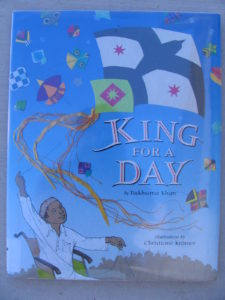
King for a Day            

By Rukhsana Khan, Illustrated by Christiane Kromer (Lee & Low Books Inc. ~ in 2013)

In the city of Lahore, Pakistan, all children are exciting with annual and traditional Kite-flying festival. Malik, boy in a wheelchair, prepares his kite to fly and move very first for competing other boy’s kites. At the end of the day, actually Malik has a big pile of captured kites. But then the neighborhood bully comes and tries to take a kite from a girl. Malik finds the way to help the girl.

IMG_0455

パキスタンのラホールの街で行われる Basant (Kite Festival)は、子ども達が楽しみにしている伝統的な行事である。特に、Kiteを空で戦わせるのに、子ども達は夢中になる。車椅子の少年は、最も早く動くKiteを作って、その日に備えた。その日の王者を自称していたこの少年は、意地悪な子への挑戦心と弱い子へのいたわりも示した。貼り絵を活用したイラストは、親しみと暖か味を含んでいる。ラホール生まれでカナダに住む著者は、多くの児童書を著作し受賞作品もあり、Big Red Lolipop も彼女の作品である。

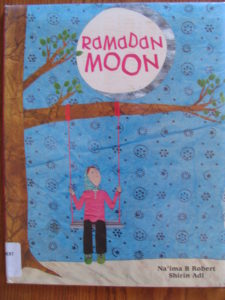
Ramadan Moon

By Nafima B Robert, Illustrated by Shirin Adl                                                                   (Frances Lincoln Childrenfs Books~ in 2009)

Muslims all over the world celebrate Ramadan, the month of fasting, and joyful days of Eid at the end of the Ramadan as the most special time of year. This lyrical and inspiring picture book captures the wonder and joy of this special annual event, from the perspective of a child. And this book not only for all children who celebrate Ramadan but also for children in the wider communities who want to understand why this is such a special experience for Muslims.

IMG_0083

日本語訳本のタイトルは「ラマダンのお月さま」

世界中のイスラム教徒が祝うラマダン(断食月)への思いを、少女が空の月に重ねて語っている絵本。ラマダンの過ごし方とラマダン終了後のイードの祝いの様子が、イスラム教徒に馴染みのない人たちにも解り易く紹介している。簡潔で貼り絵もあるイラストは、英国生まれでイラン育ちのイラストレーターの作品。イスラム教徒の作者は母親でもあるが、スコットランド人の父親とズールー人(東アフリカの民族)の母親との混血。

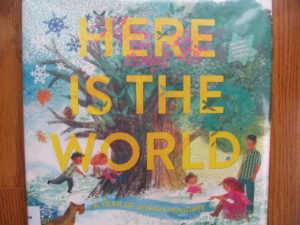
Here is the world

By Leslea Newman, Illustrated by Susan Gal                                                                    (Abrams Books for Young Readers ~ in 2014)

As showing the subtitle “A year of Jewish Holidays” , the book introduces young children to a joyous year of Jewish holidays and celebrations in the traditional way. With rhyming text and digitally collaged illustrations will help to gain the meaning of these special festivities of the life. At the last pages, you will find Hebrew words and the more explanation of each special holidays with traditional foods and crafts.

IMG_9864

副題にA Year of Jewish Holidaysとあり、ユダヤ人の祝日を子どもの誕生を通してからの一年の歳月の中で紹介している。貼り絵のようなタッチのイラストは親しみ易く温かみが伝わってくる。家族のつながりと愛情が、それぞれの伝統的な祝いの中で生き生きとしている。文中の英文は短く詩のようではあるが、巻末で詳しくヘブライ語の言葉や意味を解説し、それぞれの祝日に関係する伝統的な食べ物の作り方やクラフトの作り方もある。ユダヤ人の子ども達の伝統継承のみならず、ユダヤ文化理解にも大いに役立つ絵本である。

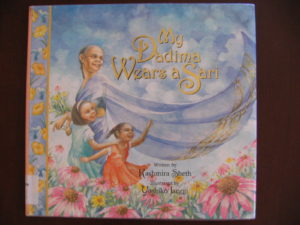
My Dadima wears a Sari                 

By Kashmira Sheth, Illustrated by Yoshiko Jaeggi (Peachtree ~ in 2007)

Everyday, Rupa’s grandmother, Dadima, wears a beautiful Indian traditional sari in America. Dadima shares with Rupa all the wonderful things that saris can do from an umbrella in a rainstorm to providing a deep pouch to carry seashells. Soon Rupa’s own imagination is sparked. A note from author and instructions for wrapping a sari are included.

IMG_9681

アメリカに住むインド人の祖母はいつもサリーを着ている。孫娘は、素朴な質問を祖母に尋ねた。そして段々と孫娘達もサリーに興味が湧いてきた。祖母との会話の中に、伝統の重みをと暖か味を感じ取る少女たち。そんな孫娘達に、サリーの魅力が生き生きと伝わってゆく。巻末にはサリーの着方を写真入で解説している。サリーの心地良さをそのまま絵にしたような柔らかいタッチの水彩画は、日本生まれのイラストレーターの力作で、表情も柔らかく生き生きとしている。

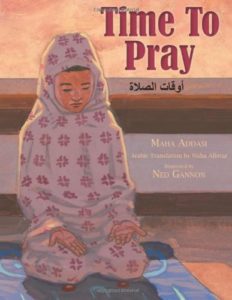
Time to pray

By Maha Addashi, Arabic Translation by Nuha Albitar, Illustrated by Ned Gannon (Boyds Mills Press –Honesdale, Pennsylvania in 2010)

Yasmin visits her grandmother in the Middle East. During experience of traditional daily life, Yasmin learns how and when to pray.  Yasmin’s grandmother makes her prayer clothes, and buys her player rug. Written in English-Arabic Text.

51dp6u00vnl

イスラム教国に住む祖母を一人で訪ねた少女は、祖母を通じて祈りの伝統を学んでゆく。そして、帰国して持ち帰った品々には、祖母の愛情が込められた祈りの時に必要なものばかり、、、。祖母と孫娘の愛情が、伝統の重みに暖かさを与えてくれる。暖か味のあるイラストも効果を上げている。文字は英語とアラビア語で書かれている。宗教に関係なくとも、イスラム教の祈りの伝統を学ぶのにも役立つ絵本である。

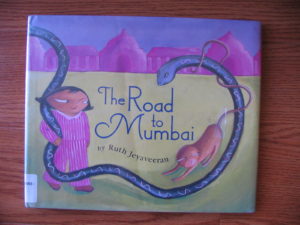
The road to Mumbai

By Ruth Jeyaveeran (Houghton Mifflin Company – New York, NY in 2004)

Shoba and her friend Fuzzy, stuffed monkey, live in East India, and Shoba and Fuzzy leave to Mumbai to attend Fuzzy’s cousins’ wedding in the following day. On the way to Mumbai, Shoba and Fuzzy meet different persons and animals and ask them the direction, with wishing nobody follow to them.

2014-04-30 07.55.07

ニューヨークのブルックリンに住むインド女性の処女作。インドの現代版おとぎ話ようでもあり、作者の母なる文化への思いを込めた作品でもある。東インドに住む少女の友達でもある猿が、明日従兄弟の結婚式がムンバイであると言い、少女と猿は急いでムンバイに旅立った。途中で出会った人達や動物に道を尋ねながら、皆が後をついて来ない様に願いながら、、、、動物たちが擬人化されていて、夢のような世界に導かれる。巻末にはインドの日常で耳にする食べ物、乗り物、衣装の解説がある。

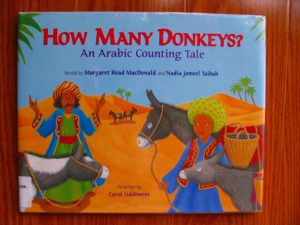
How Many Donkeys? – An Arabic Counting Tale

Retold by Margaret Read MacDonal and Nadia Jameel Taibah, Illustrated by Carol Liddiment (Albert Whitman & Company – Illinois in 2009)

Jouha is loading his ten donkeys with dates to sell at the market. As he rides along, he counts nine donkeys and believes one is lost. When he gets off his donkey, and count again ten donkeys that makes him to believe the missing donkey is back. As Jouha repeats to count his ten or nine donkeys several times, we can learn to count one to ten in Arabic.      >Phonetically sounds of counting in Arabic found @MRM site

2013-06-24 09.30.59

副題に数を数えるアラビアの民話とあるように、アラビア語の10までの数の数え方が、幾度も繰り返し出てくる。デーツを市場で売るために10頭のロバに運ばせるのだが、主人公の男性がロバに乗って数える度に、9頭になってしまう。そしてロバから降りると、10頭になる。この理由がわからず何度も数えなおす。とても愉快なこの民話は、M.R.M.とサウジアラビア人のNadiaによって再生された。民話の語り部でもあるM.R.M.のサイトでは、アラビア語の数え方の音も聞くことが出来る。イラストも明るく幼児でも親しみがもてる。

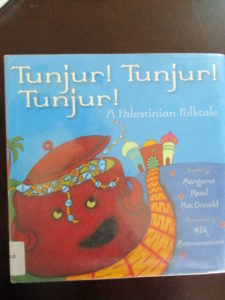
Tunjur! Tunjur! Tunjur! –A Palestinian Folktale

Retold by Margaret Read MacDonald, Collected by Ibrahim Muhawi and Sharif Kanaana, Illustrated by Alik Arzoumanian (Marshall Cavendish Children – New York in 2006)

A childless woman wishes to have a baby, and she gets a pot.  She loves the pot and take care of it, just like as her own child. The little pot wants to make her mother pleased and runs off from the house, but is not enough old to understand between right and wrong. >>> Tunjur! Tunjur! Tunjur! is the sound pot made when it rolls everywhere.  Margaret Read MacDonald travels around the world to search traditional folktales.

IMG_4497

 タイトルはお鍋が転がる時の音を文字化したもので、パレスチナの民話の一つ。Margaret R.MacDonaldは、世界の民話を発掘する為に、旅行をしている。この民話は、ある女性が子ども代わりに可愛がっていた小さな鍋が、世の中の良し悪しも解らぬままに一人で出かけて、母親を喜ばせる為だけを考えて行動をした戒めの話。苦い経験をしながら子どもが成長してゆくのは、どこの世界でも変わらない。