In the garden with Dr. Carver

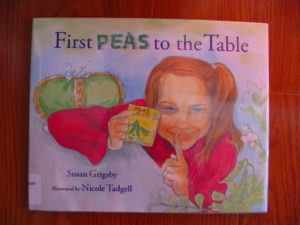
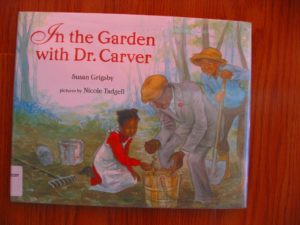
By Susan Grigsby, Illustrated by  Nicole Tadgell (Albert Whitman & Company – Chicago in 2010)

Inspired story by Dr. George Washington Carver’s historical contribution. Sally is a young girl living in rural Alabama in early 1900s, a time when people were straggling to grow food in soil that had been depleted by years of cotton production. One day, Sally and her classmates get scientific lessons from Dr. Carver who arrives in a “funny-looking wagon” pulled by an old mule. >>> On the last page, providing Dr. G.W.Carver’s biography and his social contributions in the several fields of biology.  The same author and illustrator with ” First peas to the table”.

2013-07-29 15.34.05

自然が大好きで、庭作りを愛する童話作家とイラストレイターのコンビで、米国の誇る植物学者ジョージ・ワシントン・カーヴァー博士と少女の出会いを、語っている。絵本の話は実話ではないが、カーヴァー博士に関する多くの資料を基にして絵本が制作された。巻末にはカーヴァー博士の偉業の解説がある。博士は1864年奴隷制度下のミズリー州に生まれ、奴隷解放後はドイツ系移民のカーヴァー氏に雇われ、植物に対する知的好奇心を向上させ、後に大学の植物学者となる一方、南部における農地改良にも大きく貢献した。そのカーヴァー博士は、移動学校と呼んだワゴンに農道具や種や苗を乗せて南部各地を回り、農業指導や農園指導にあたった。絵本制作者達の大自然への愛が伝わる絵本。

Stone Soup

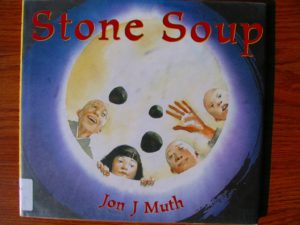
Retold and illustrated by Jon J. Muth. (Scholastic Press – New York in 2003)

Three  Buddhist monk come to a small village, but the village people without any hospitality keep distance from the strangers. When the monks becomes very hungry, they decide to make stone soup, as any other ingredients for the soup cannot find.  A village girl with full of curiosity brings a big pot for the monks to see how it works. And then, one by one village people offer a ingredient, and at the end everyone join to eat the soup together.  >>>Transformed story from one of old tales which are discovered the similar storyline in different counties.

2013-07-15 15.57.25

3人の旅の坊さんが、ある村に来た時、見知らぬ旅の坊さんにそっけなく、村人達は全員隠れてしまった。お腹のすいた坊さん達は、石でスープを作ることにした。それを見ていた好奇心の強い一人の女の子が、石のスープを作るために、大なべを見つけてきてくれた。様子を見ていた村人達が、一人又一人と、スープに入れる材料を提供してきた。結局は村人達が皆一緒になって、スープを食べ楽しんだ。この種の内容の話は、多くの国の民話にあると、作者のJon Muthが巻末で解説しているが、中国の坊さんに登場してもらったそうだ。東洋的なイラストも、ぴったりとこの話しに合っている。

The Tree That Would Not Die

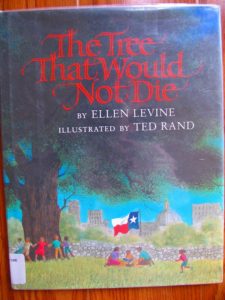
By Ellen Levine, Illustrated by Ted Rand (Scholastic Inc. – New York in 1995)

 About 500 years ago, a baby oak sprouts and starts to grow to a big tree.  Under this oak tree Natives Americans and newly arrived settlers talk about their agreements, and the tree sees that people develop a small village to big city, simultaneously  observes all their histories. One day someone poisons over the tree, and almost die.  People pray for the tree and take care it to survive. And then, its life comes back again.  This is a story of the real Oak tree in Austin, Texas.

2013-06-24 09.33.07

500年ほど前に、大地に芽生えて成長始めたオークの木。その木が生長と共に見てきた歴史を語った内容の絵本だが、米国テキサス州オースチンの街に実在する木である。かつて原住民との契約をこの木の下で交わして、新住民達が移民し街を発展させた由縁のある木であるが、毒を撒かれて半死の状態にもなった。それでも多くの人達の祈りと支援で、枯れることなく生き延びて、生命の強さを物語っている。

How Many Donkeys? – An Arabic Counting Tale

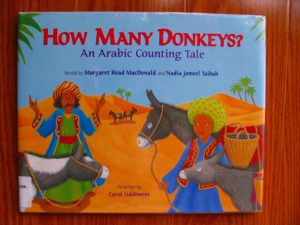
Retold by Margaret Read MacDonal and Nadia Jameel Taibah, Illustrated by Carol Liddiment (Albert Whitman & Company – Illinois in 2009)

Jouha is loading his ten donkeys with dates to sell at the market. As he rides along, he counts nine donkeys and believes one is lost. When he gets off his donkey, and count again ten donkeys that makes him to believe the missing donkey is back. As Jouha repeats to count his ten or nine donkeys several times, we can learn to count one to ten in Arabic.      >Phonetically sounds of counting in Arabic found @MRM site

2013-06-24 09.30.59

副題に数を数えるアラビアの民話とあるように、アラビア語の10までの数の数え方が、幾度も繰り返し出てくる。デーツを市場で売るために10頭のロバに運ばせるのだが、主人公の男性がロバに乗って数える度に、9頭になってしまう。そしてロバから降りると、10頭になる。この理由がわからず何度も数えなおす。とても愉快なこの民話は、M.R.M.とサウジアラビア人のNadiaによって再生された。民話の語り部でもあるM.R.M.のサイトでは、アラビア語の数え方の音も聞くことが出来る。イラストも明るく幼児でも親しみがもてる。

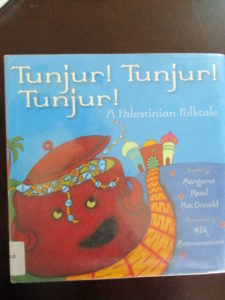
Tunjur! Tunjur! Tunjur! –A Palestinian Folktale

Retold by Margaret Read MacDonald, Collected by Ibrahim Muhawi and Sharif Kanaana, Illustrated by Alik Arzoumanian (Marshall Cavendish Children – New York in 2006)

A childless woman wishes to have a baby, and she gets a pot.  She loves the pot and take care of it, just like as her own child. The little pot wants to make her mother pleased and runs off from the house, but is not enough old to understand between right and wrong. >>> Tunjur! Tunjur! Tunjur! is the sound pot made when it rolls everywhere.  Margaret Read MacDonald travels around the world to search traditional folktales.

IMG_4497

 タイトルはお鍋が転がる時の音を文字化したもので、パレスチナの民話の一つ。Margaret R.MacDonaldは、世界の民話を発掘する為に、旅行をしている。この民話は、ある女性が子ども代わりに可愛がっていた小さな鍋が、世の中の良し悪しも解らぬままに一人で出かけて、母親を喜ばせる為だけを考えて行動をした戒めの話。苦い経験をしながら子どもが成長してゆくのは、どこの世界でも変わらない。

Lala Salama -A Tanzanian Lullaby

By Patricia MacLachlan, Illustrated by Elizabeth Zunon                                                            (Candlewick Press – Massachusetts in 2011)

A day of Tanzanian family living by the lake, from dawn until the time to sleep. “Lala Salama” means Good Night (direct translation is to sleep peacefully) in Swahili.

タイトルはスワヒリ語の「おやすみなさい」,直訳は「やすらか・平安に眠りなさい」。    「子ども達が眠りにつく時、世界中のどの言語でも、子ども達に言う愛情のこもった言葉がある」と作者のPatricia が言うとおり、ララ サラマの響きはタンザニアの子ども達に心地の良い言葉に違いない。そんな安らかさが、各ページ毎のイラストに溢れている。湖の湖畔に暮らす家族の一日を描いた絵本だが、読者をなにげない幸福感に満たしてくれる。

Big Jimmy’s KUM KAU-Chinese Take Out

By Ted Lewin (Harper Collins Publishers – New York in 2002)

Inspired by a Chinese Take Out family restaurant located in neighborhood of Ted Lewin, living in Brooklyn, New York.  A son of Chinese Take Out Restaurant’s owner observes his father’s job and he is proud of his father. Insides of the front and back covers, designed like as a menu of Chinese cousins with each price on.

作者兼イラストレイターのTed Lewinが住んでいるニューヨークのブルックリンにある、持ち帰りの中華料理店がモデルとなって生まれた絵本。表裏の表紙を開けると、まるで中華料理店のメニューを開くごとく、ビッシリと料理名と値段のリストが並んだメニューそのもの。内容は、中華料理店の息子 が、準備段階から料理店の仕事を観察したもので、彼の父親の仕事に対する誇りが感じられる。イラストはフィルムのコマのように連続で描かれているページもあり、実際に写真を撮って参考にした写実画は、どれも生き生きとしている。

My name is Sangoel

By Karen Lynn Williams & Khadra Mohammed, Illustrated by Catherine Stock(Eerdmans Books for Young Readers – Cambridge UK in 2009)

Eight years old Sangoel comes the United Stats from a refugee camp after his father killed caused of the conflict war in Sudan.  As following to an old man’s suggestion in the refugee camp, Sangoel keeps his name, which is passed form his ancestors, even living in America. However everyone mispronounces his Dinka name. One day, he gets the bright idea to make a rebus of a sun and a soccer goal on his T-shirt.

2013-06-03 14.34.39

アフリカのスーダンで紛争が起こった時、父を殺され難民となった少年が、母と妹と共に米国へ移民することになった。「アメリカへ行っても、祖先から引き継いだ名前を、忘れないで.」と、難民キャンプで知り合った老人から言われた少年は、米国の学校で自分の名前を発音出来ない人達に、読み方をT-シャツに書いて示した 。そのアイデアが、学校の仲間に広がって、、、、異文化圏に移動した時、どの子にとっても名前は大きな課題にもなる。

Small Beauties ~The Journey of Darcy Heart O’Hara

By Elvira Woodruff, Illustrated by Adam Rex (Alfred A. Knopf –New York in 2006)

Irish girl Darcy lives in a small cottage with her large family in 1840s Ireland. Life in her homeland with nature is simple and sweet, and Darcy grows up to notice delight in the small beauties all around her. One day a blight strikes the land, the  potatoes turn rotten, and Darcy and her family must leave Ireland forever. Fortunately Darcy finds a way to bring the small beauties of her homeland across the sea to America.

2013-06-02 13.58.41

大自然の恵みである小さな美しいものを集めていた少女は、スカートのすそにそれらをしまい込んでいた。アイルランドで貧困と戦いながらも、大自然の美しさに驚嘆する心を忘れなかった少女は、住む家を無くし家族とアメリカに船で移民した時も、故郷の小さな美を家族のために持ってきていた。英語は植物の専門用語もあり、高学年向きの読む絵本。

The Boy who lived with the Seals

By Rafe Martin, Illustrated by David Shannon                     (G.P. Putnam’s Sons ­­–New York in 1993)

Inspired by an old folktale of Native American living in the northwest coast.  A boy played in the riverside is suddenly disappeared, and long time after he is spotted near an island, swimming with seals.  He returns to live with his people, but he is not the same as before. Although his parents re-educate him as in human ways, his memories of life with seals are always with him and he rejoins the seals. He carves a beautiful canoe for his human parents with his love belonged to his two different worlds.

2013-02-13 17.09.37

北米大陸の北西部海岸に住んでいた原住民に伝わっていた伝説を、絵本化したもので大変ユニークな異文化融合の話し。川辺で遊んでいた男の子が、ある日突然姿を消した。そして数年後に、アザラシの集団と共に生活している少年が発見され、人間界に戻されるのだが、、、、。彼の人間としてのカルチャーとアザラシのカルチャーが融合して、見事なカヌーを作り上げる結末には、多文化社会への多くの示唆が含まれている。